Introduction
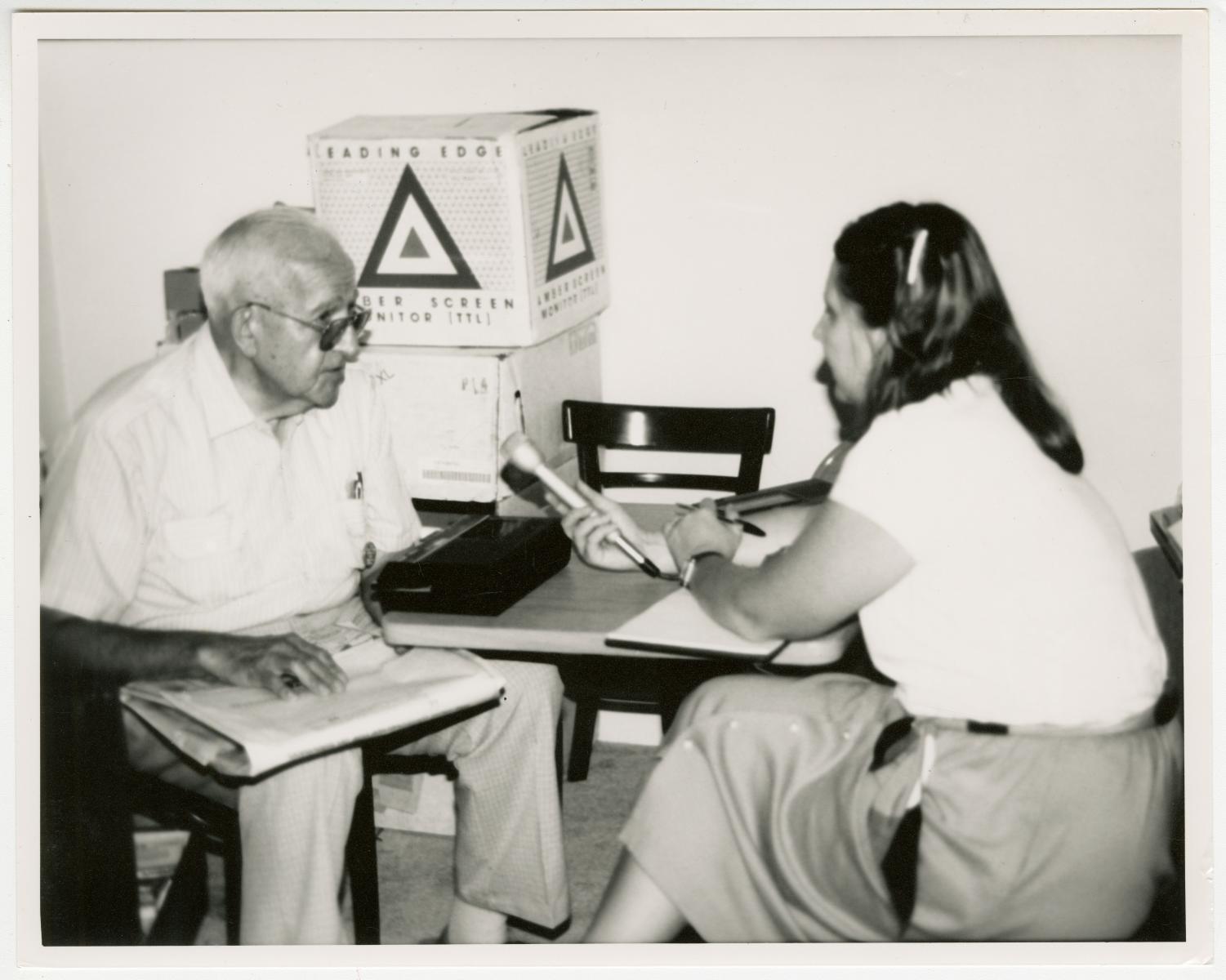
The Center for Brooklyn History provides this guide for researchers of oral history and of the many topics preserved in the ~1,400 interviews and counting. Subjects include: the Brooklyn Navy Yard, Hispanic communities, Muslims in Brooklyn, Sunset Park’s Chinese community, Jewish Brooklyn, East New York, business and industry, community activists, sports and leisure, veterans and wartime, the West Indian Day carnival, COVID-19, and much more. These recordings are available through the Brooklyn Public Library’s oral histories page and the former Brooklyn Historical Society’s oral history collections portal. In addition to these recordings, researchers are encouraged to search the archival collections and digital collections, for non-digitized oral histories, transcripts, photographs, letters, and related ephemera. Researchers are also encouraged to browse all collections and research guides for resources that may contextualize the oral histories. To create an appointment or ask a question, please contact cbhreference@bklynlibrary.org.
About the Oral History Collections
The oral history collections preserve the lives of twentieth- and twenty-first-century Brooklyn residents, and reveal how diverse individuals and communities have sought to maintain vital social, political, religious, and cultural traditions as Brooklynites, New Yorkers, and Americans. The collections contain interviews conducted in English, Spanish, Cantonese, and Mandarin, with narrators born as early as 1880. The recordings have been incorporated into exhibitions, digital humanities projects, educational curricula, public programs, the retired podcast Flatbush + Main, and independent research.
History of the Oral History Collections
In 1973, the Long Island Historical Society (later renamed the Brooklyn Historical Society) began building its oral history collection with the Puerto Rican Oral History Project, 1973-1975. It was the first large-scale Puerto Rican studies project undertaken in the U. S. mainland. In 2013, the Brooklyn Public Library's departments of Outreach and Services for Older Adults launched its oral history program with the ongoing Our Streets, Our Stories project. In 2020, the historical society and the Brooklyn Public Library merged. Now, as the Center for Brooklyn History, these recordings are freely available to listeners online or onsite. The Center for Brooklyn History is the only cultural institution in Brooklyn that maintains a permanent oral history program.
Some highlights from the oral history collection include: the AIDS/Brooklyn Exhibition collection, 1992-1993, was begun the year that AIDS became the number one cause of death for U.S. men ages 25 to 44. The Crown Heights History Project collection, 1993-1994, explores the racial dynamics of the neighborhood of Crown Heights, barely two years after what became known as the Crown Heights riot in 1991. Crossing Borders, Bridging Generations Oral History collection, 2011-2014, examines the history and experiences of mixed-heritage people and families in Brooklyn and opens up space for racial justice dialogues. Listen to This: Crown Heights Oral History collection, 2010, returns to Crown Heights for an oral history project in partnership with the Weeksville Heritage Center and the activist organization Brooklyn Movement Center, to explore the neighborhood’s continued national significance in conversations on ethnic relations, racial justice, and urban renewal. Nearly 300 interviews have been conducted under the Our Streets, Our Stories project under a Creative Commons license on various subjects, including: the Brooklyn Jewish History Project, 2019-2022, the Greenpoint Environmental History Project, 2018-2019, and the Brooklyn COVID-19 Stories Project, 2020.
Oral History Collections
- AIDS/Brooklyn Oral History Project collection, 1992-1993 (1993.001)
- Bedford Stuyvesant Restoration Corporation oral histories, 2007-2008 (2008.030)
- Brooklyn Heights Synagogue oral histories, 2010 (2011.005)
- Brooklyn COVID-19 Stories Project (OSOS_OH)
- Brooklyn Jewish History Project, 2019-2022 (BJHP)
- Brooklyn Navy Yard oral histories, 2006-2011 (2010.003)
- Brooklyn Navy Yard oral history collection, 1987-1989 (ARC.003)
- Brooklyn School of Inquiry, 2010 – 2016
- Congregation Beth Elohim oral histories, 2010 (2011.004)
- Crossing Borders, Bridging Generations oral history collection, 2011 –2014 (2011.019)
- Crown Heights History Project collection, 1993-1994 (1994.006)
- Greenpoint Environmental History Project, 2018-2019 (GEHP)
- Hispanic Communities Documentation Project records and oral histories, 1986-1991 (ARC.032)
- Independence Community Bank oral histories, 2006-2007 (2008.032)
- Listen to This: Crown Heights Oral History collection, 2010 (2010.020)
- Muslims in Brooklyn, 2018 (2018.006)
- New Neighbors: Sunset Park’s Chinese Community records, 1992-1996 (1994.007)
- Our Streets, Our Stories, 2013-present (OSOS_OH)
- Patricia Carino Pasick collection of Johnson Street Filipino-American oral histories, 2004-2014 (2013.001)
- Pfizer Inc. collection, 1839-2008 (ARC.084)
- Puerto Rican Oral History Project records, 1973-1975 (1976.001)
- Sarita Daftary-Steel collection of East New York oral histories, 2014-2015 (2015.011)
- Voices of Brooklyn oral histories, 2006 – present (2008.031)
- Voices of Crown Heights, 2016-2017 (2016.027)
- West Indian Carnival Documentation Project records, 1994-1995 (2010.019)
This research guide was updated April 2026.
More research guides:
- 128 Pierrepont Street
- Agriculture
- Black History
- Brooklyn Dodgers
- Brooklyn Navy Yard
- Civil Rights
- Civil War
- Coney Island & Gravesend
- Early Long Island History
- Family History and Genealogy
- Green-Wood Cemetery
- House and Building History
- Indigenous Peoples of Long Island and New York
- Jewish History
- LGBTQ+ History
- Library Collections
- Neighborhood Change and Gentrification
- Oral Histories
- Remote Research
- The Revolutionary War in Brooklyn
- Waterfront: Business and Manufacturing
- Waterfront: Ferries